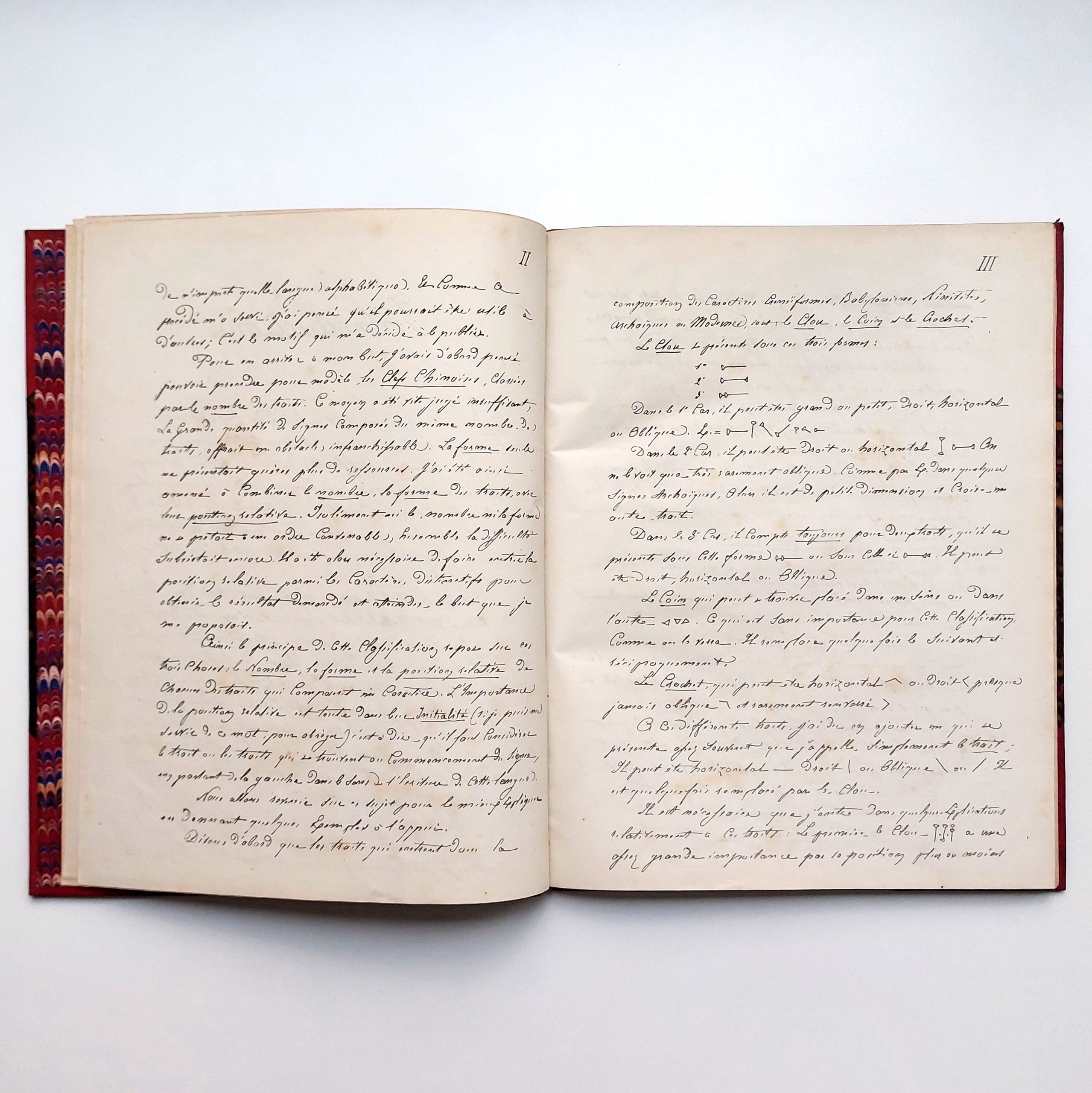
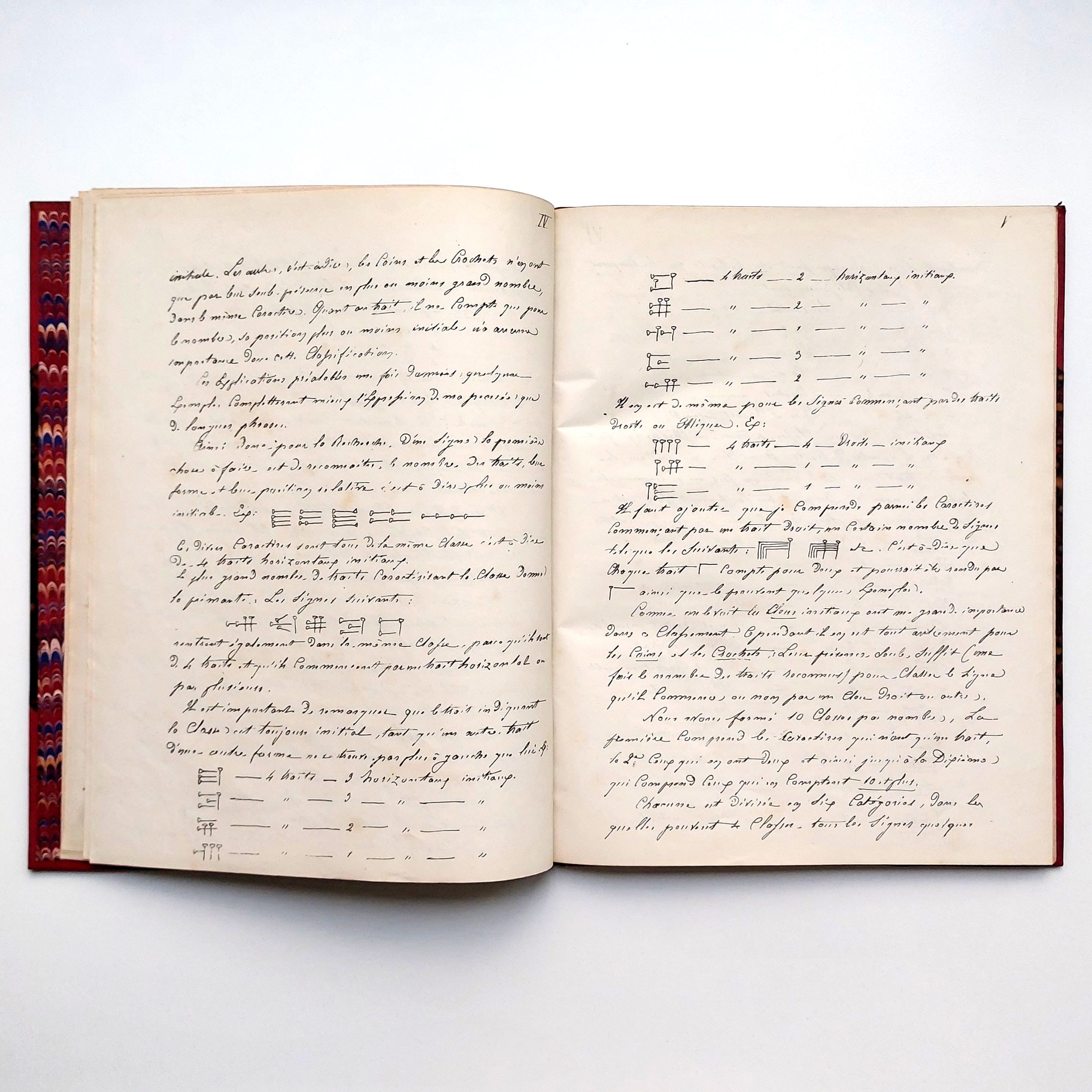
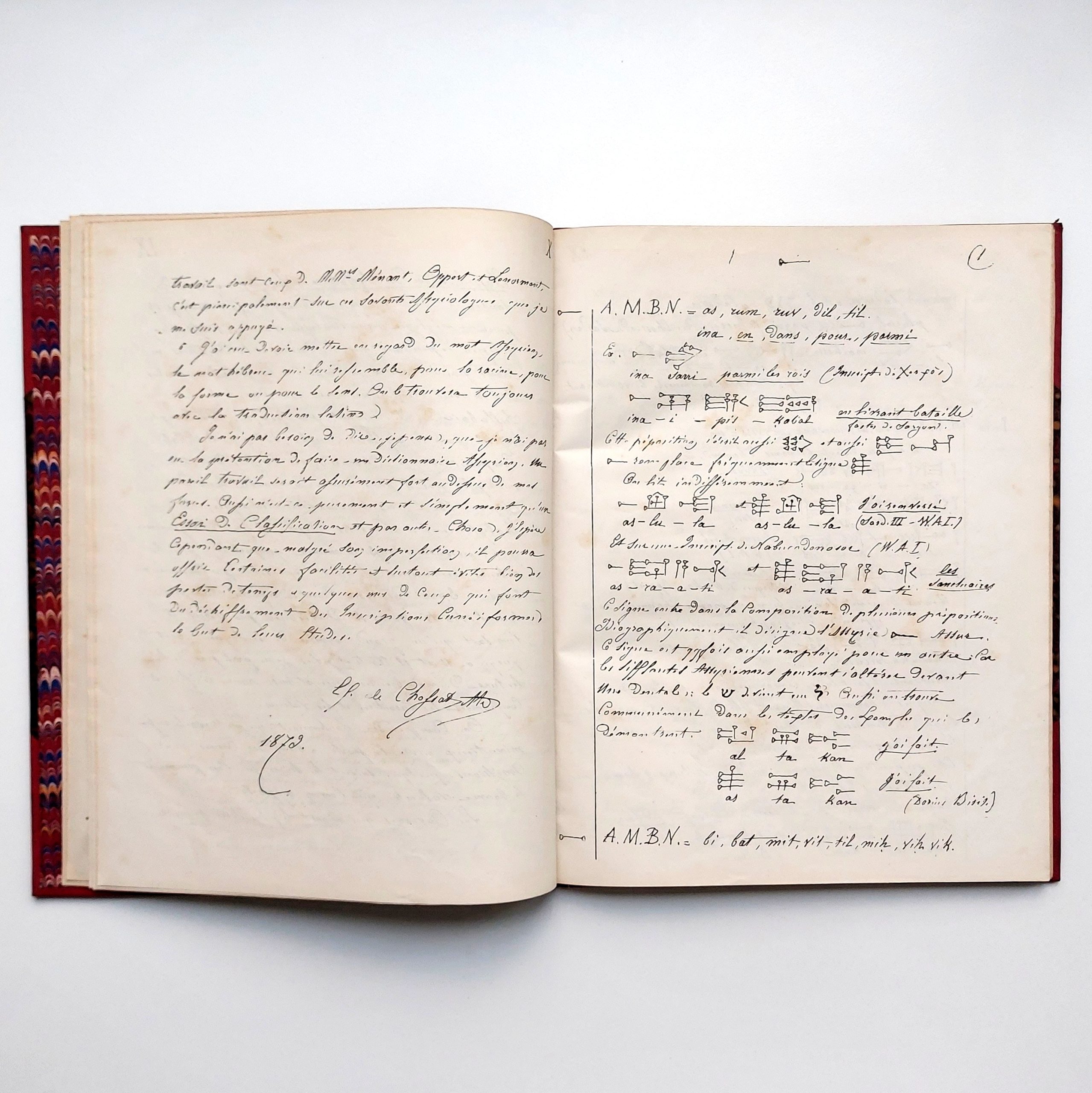

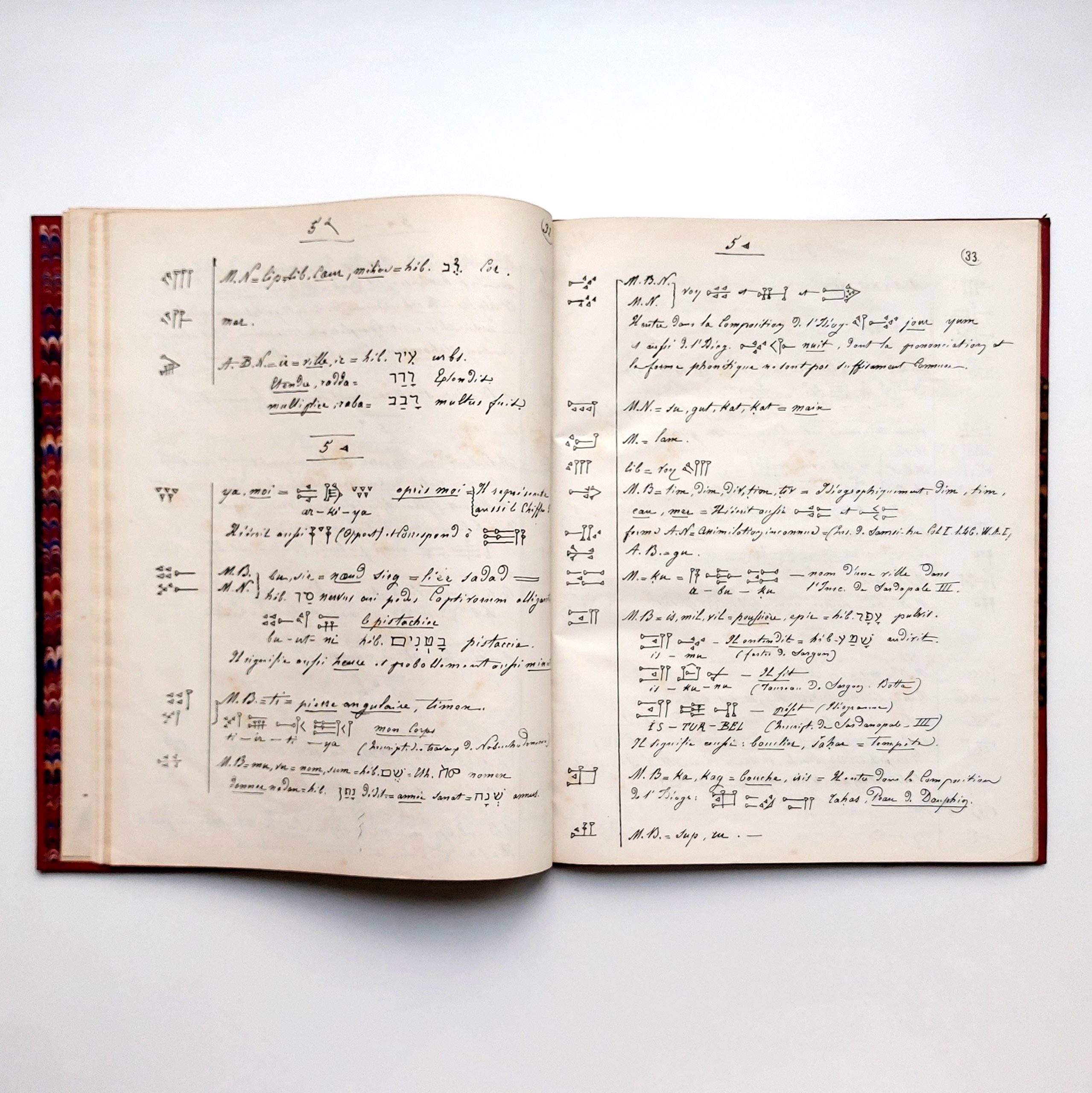
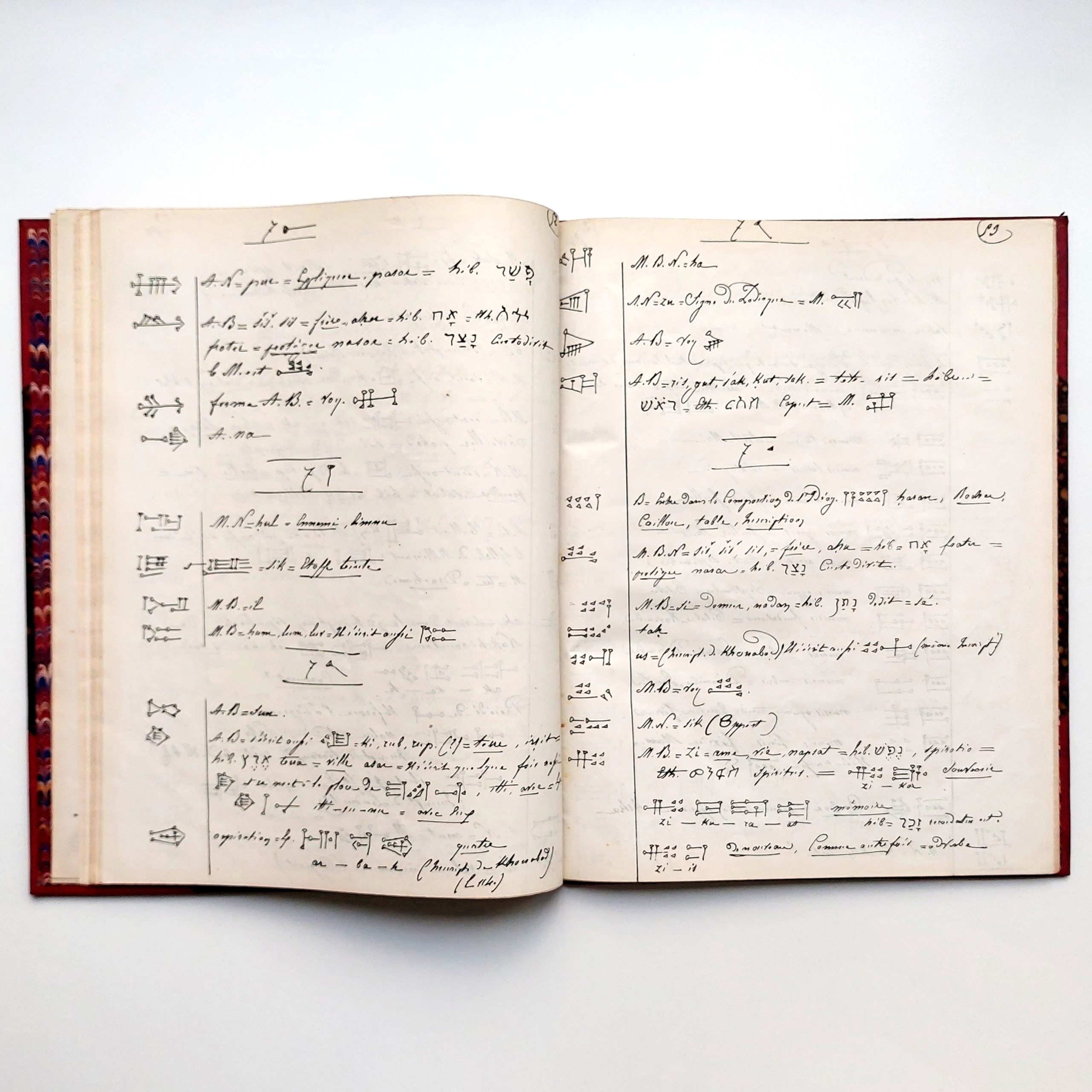
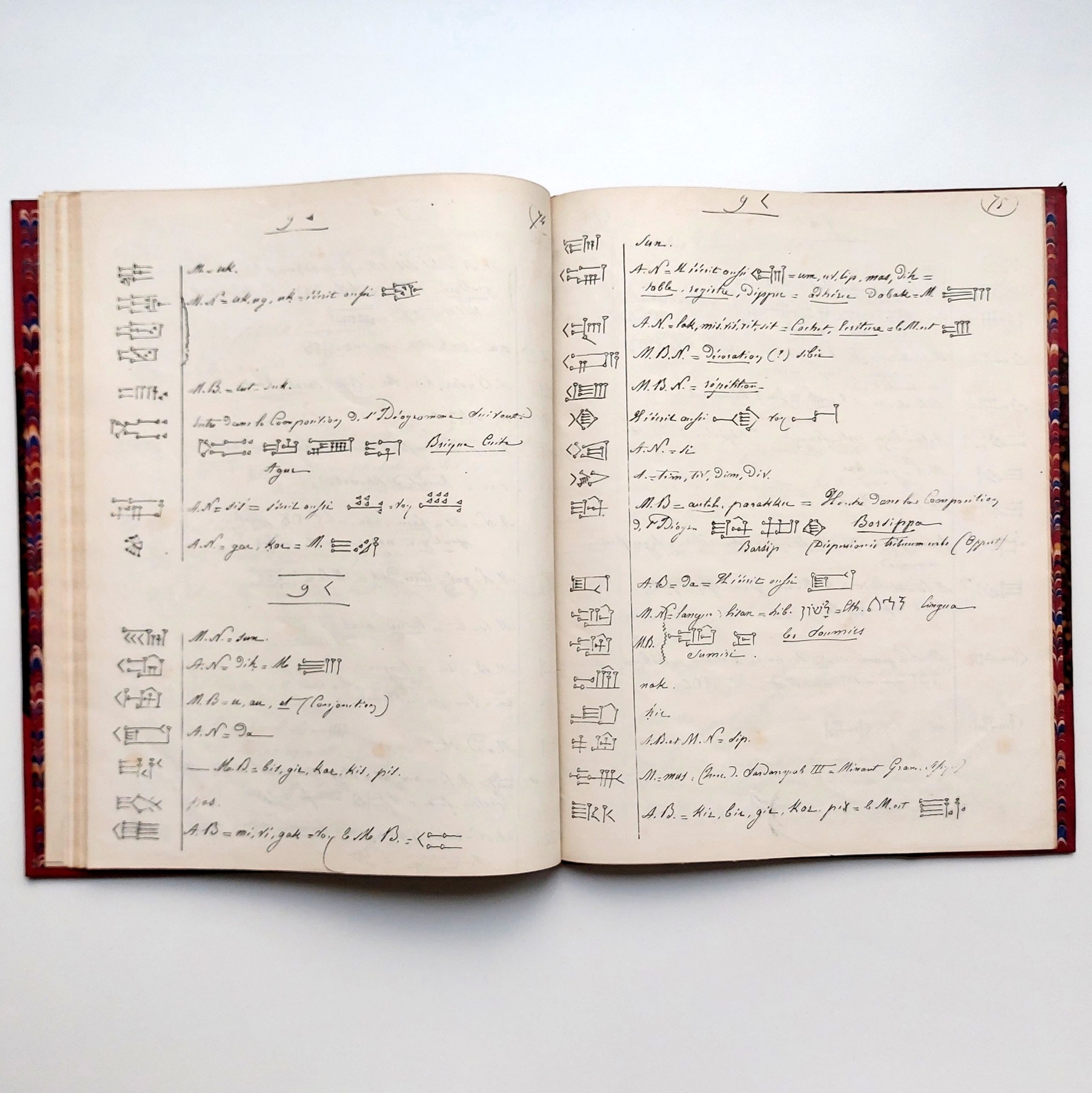
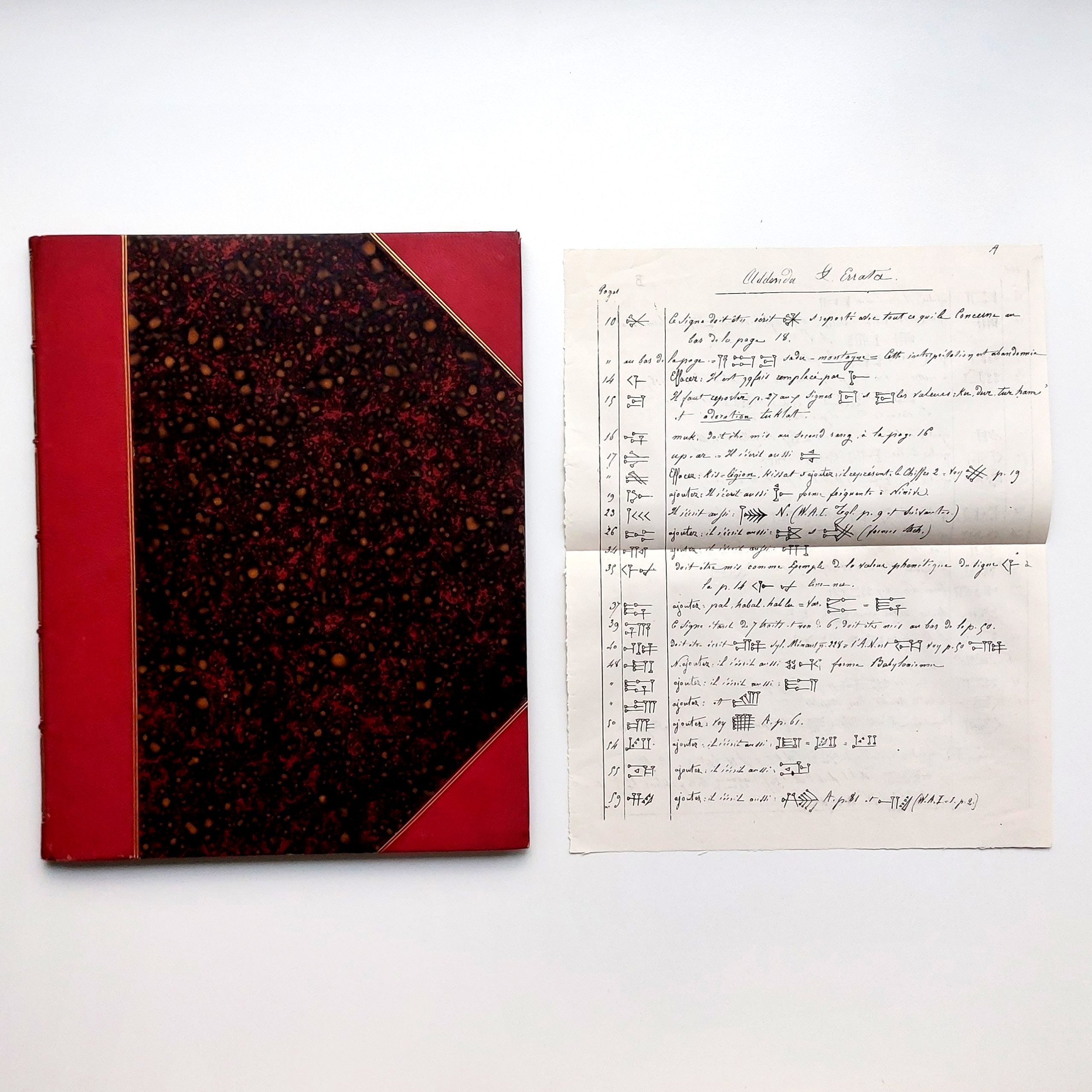
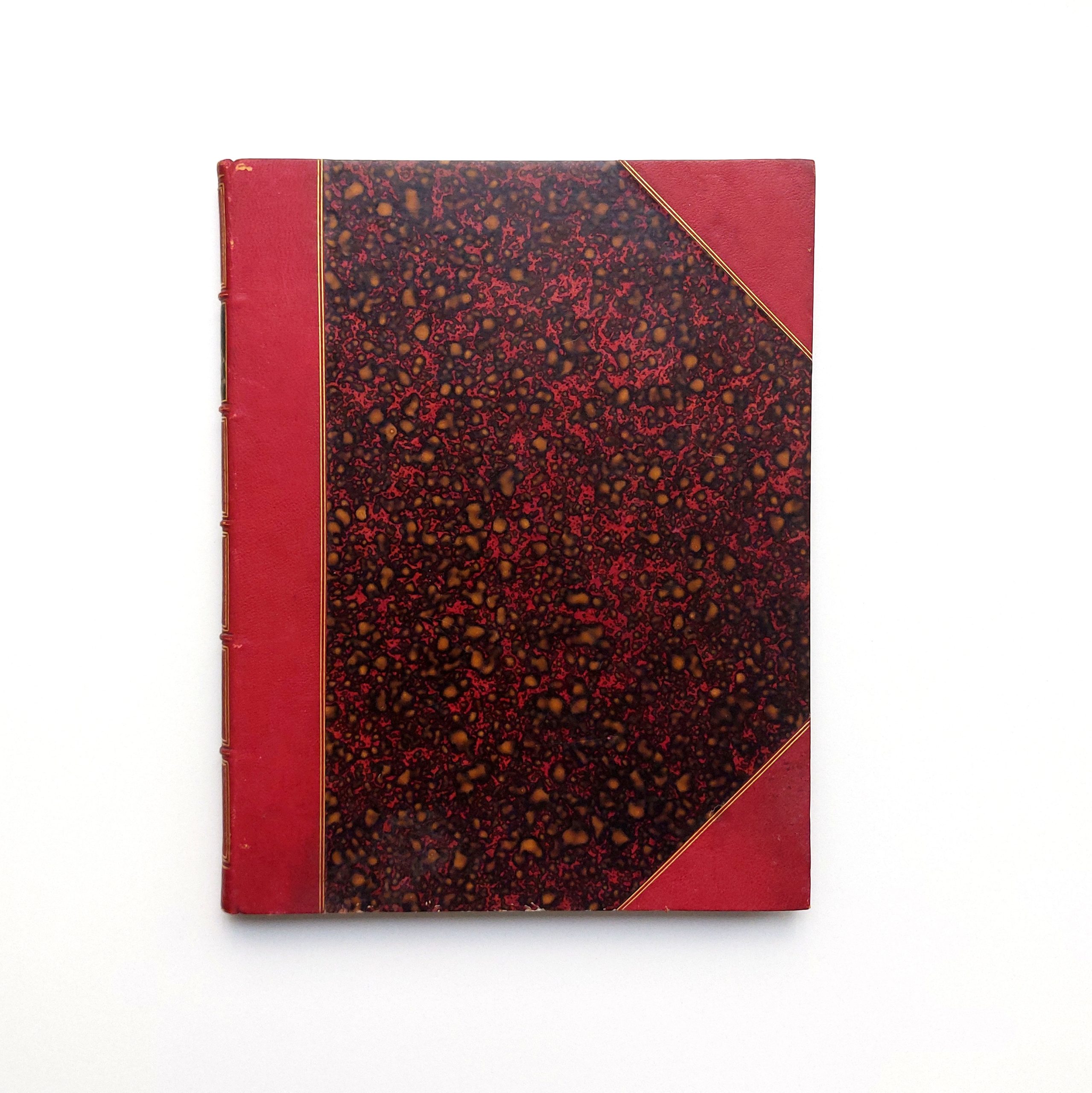
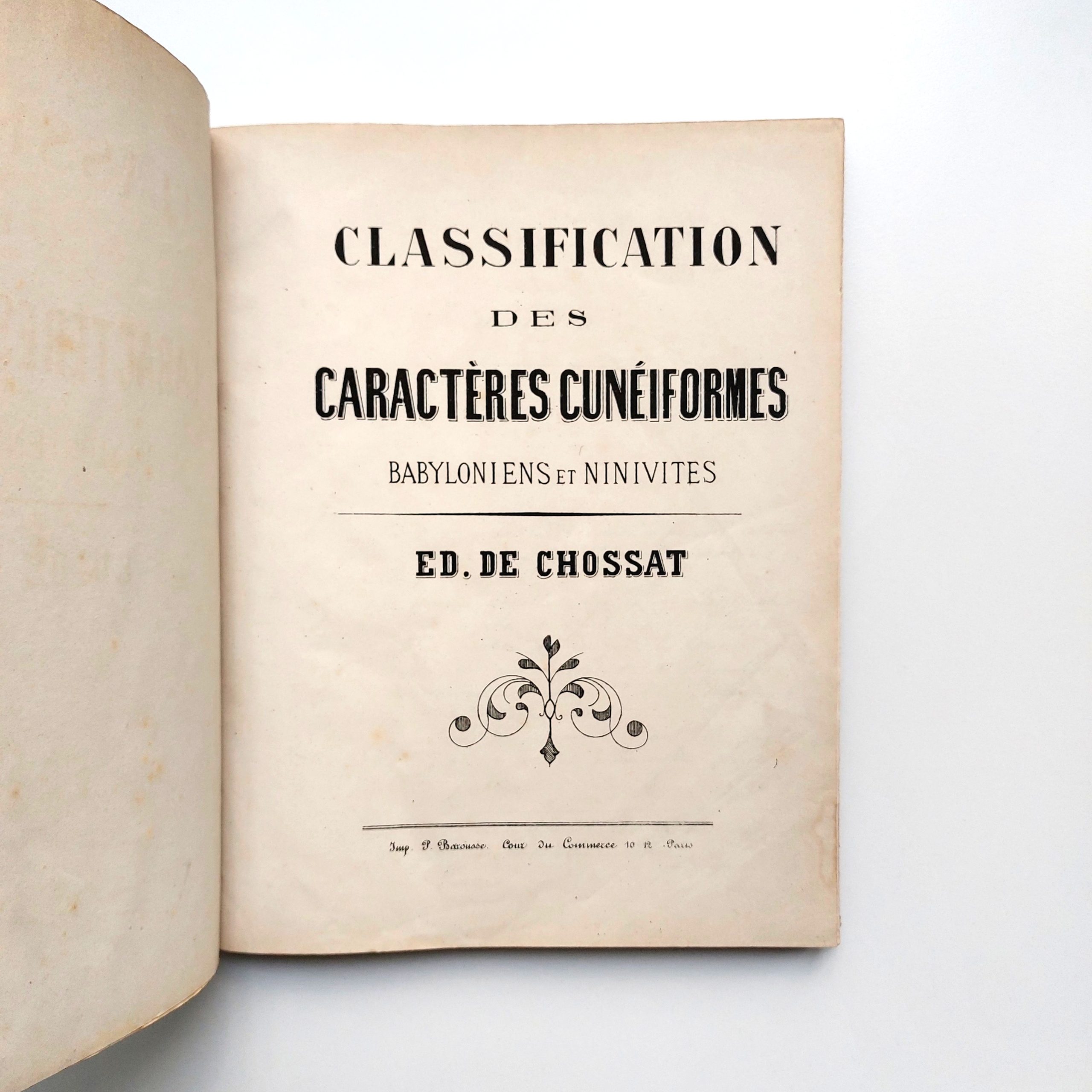
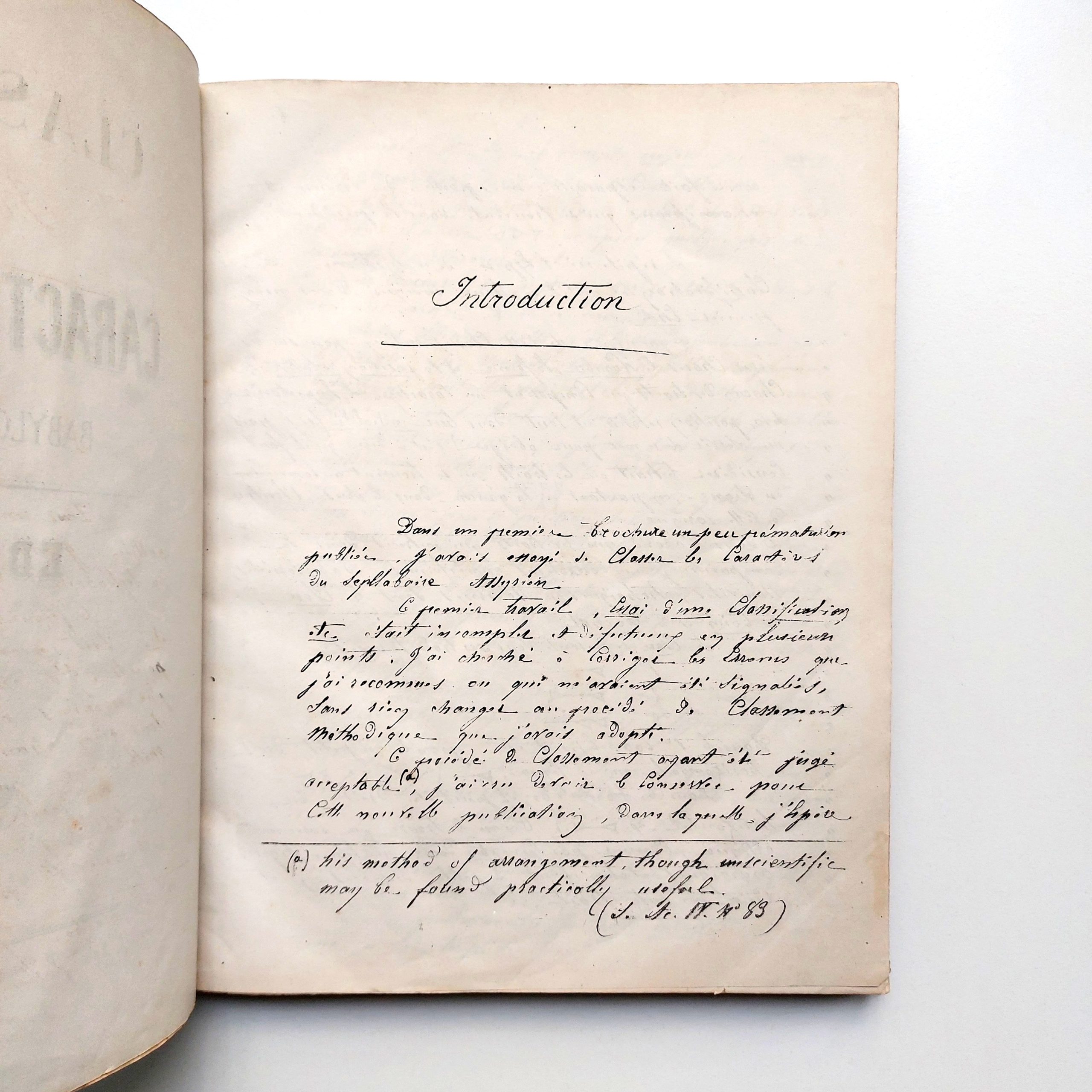

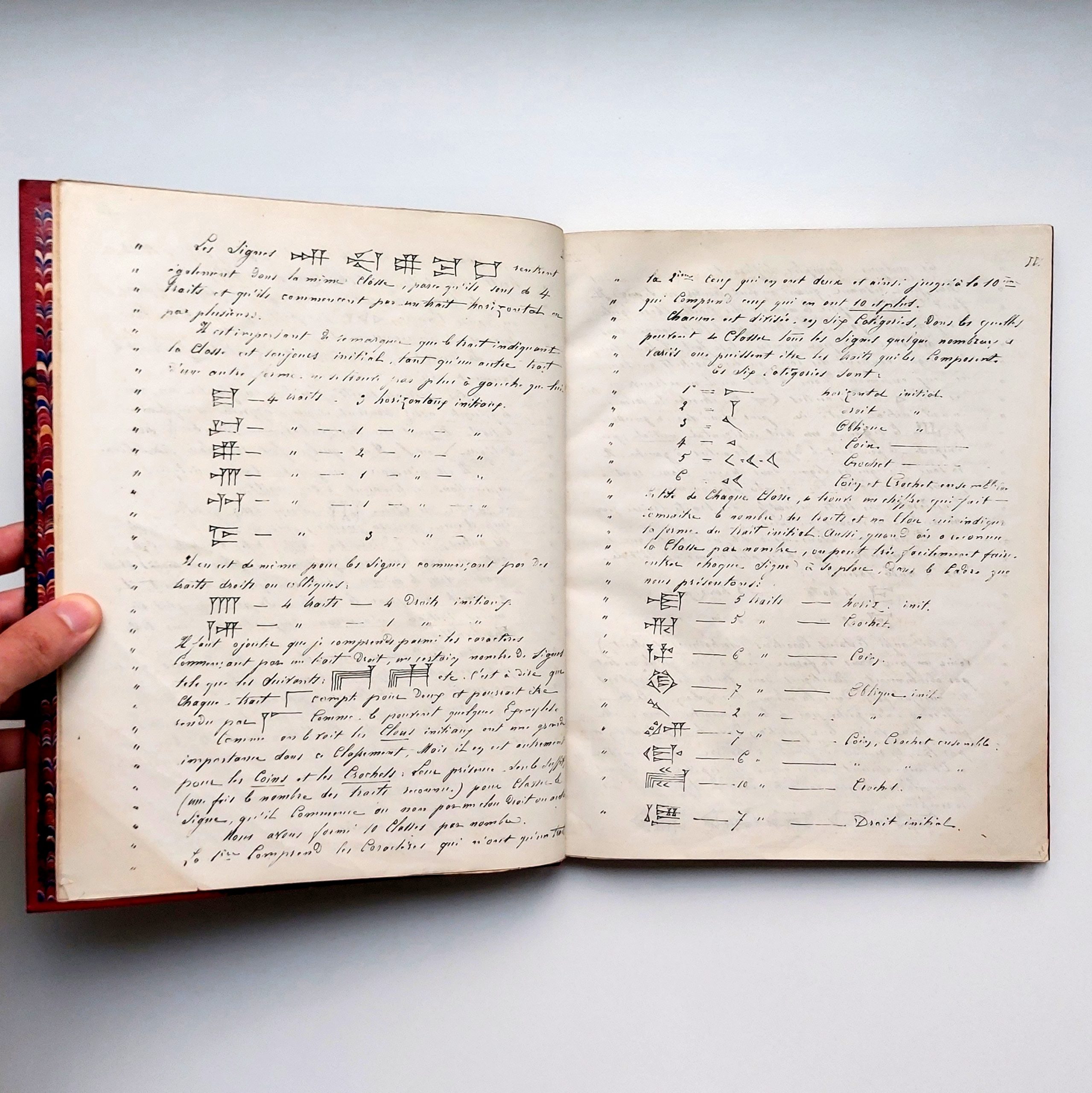
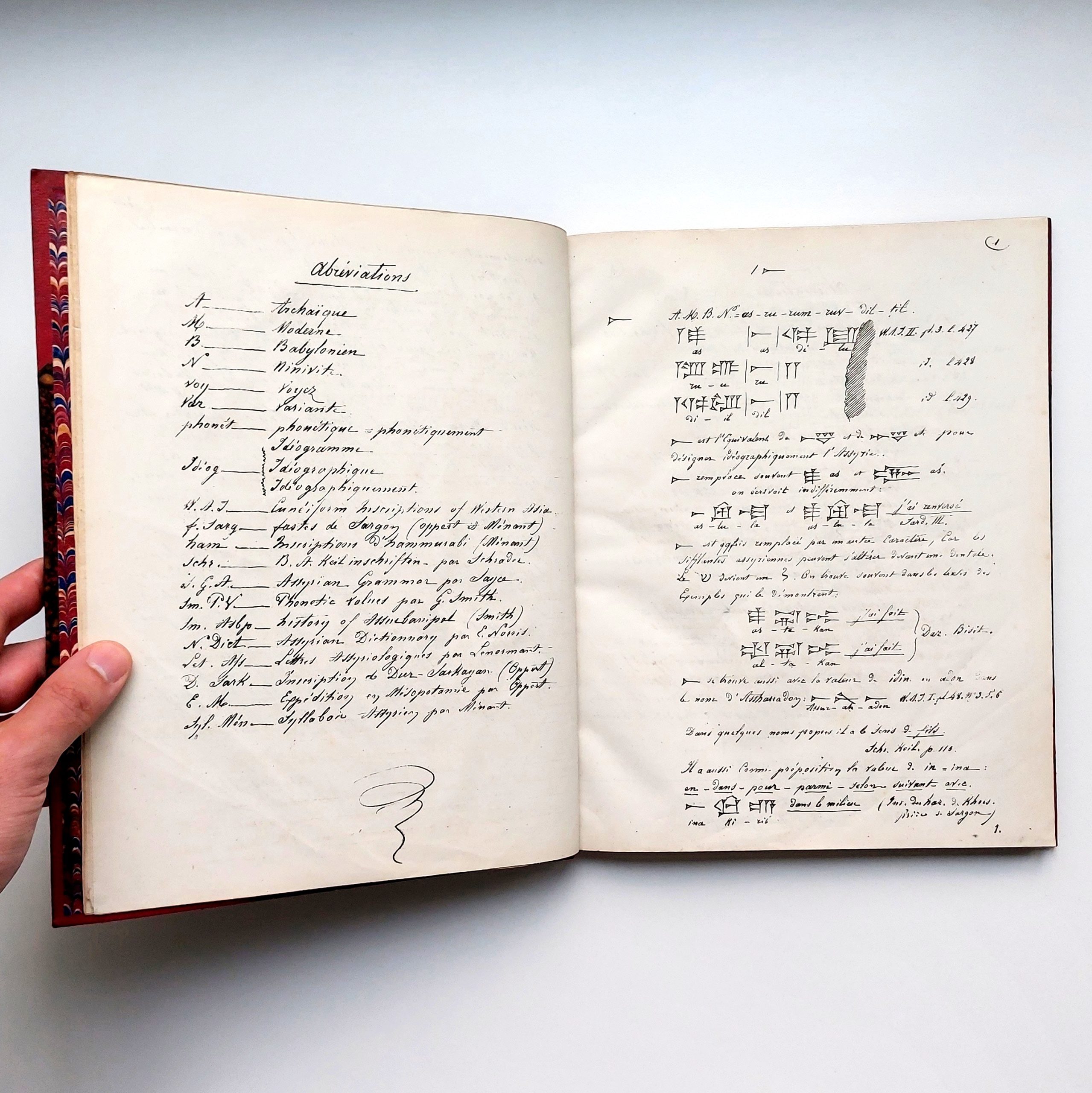

Two important works on the classification of cuneiform signs.
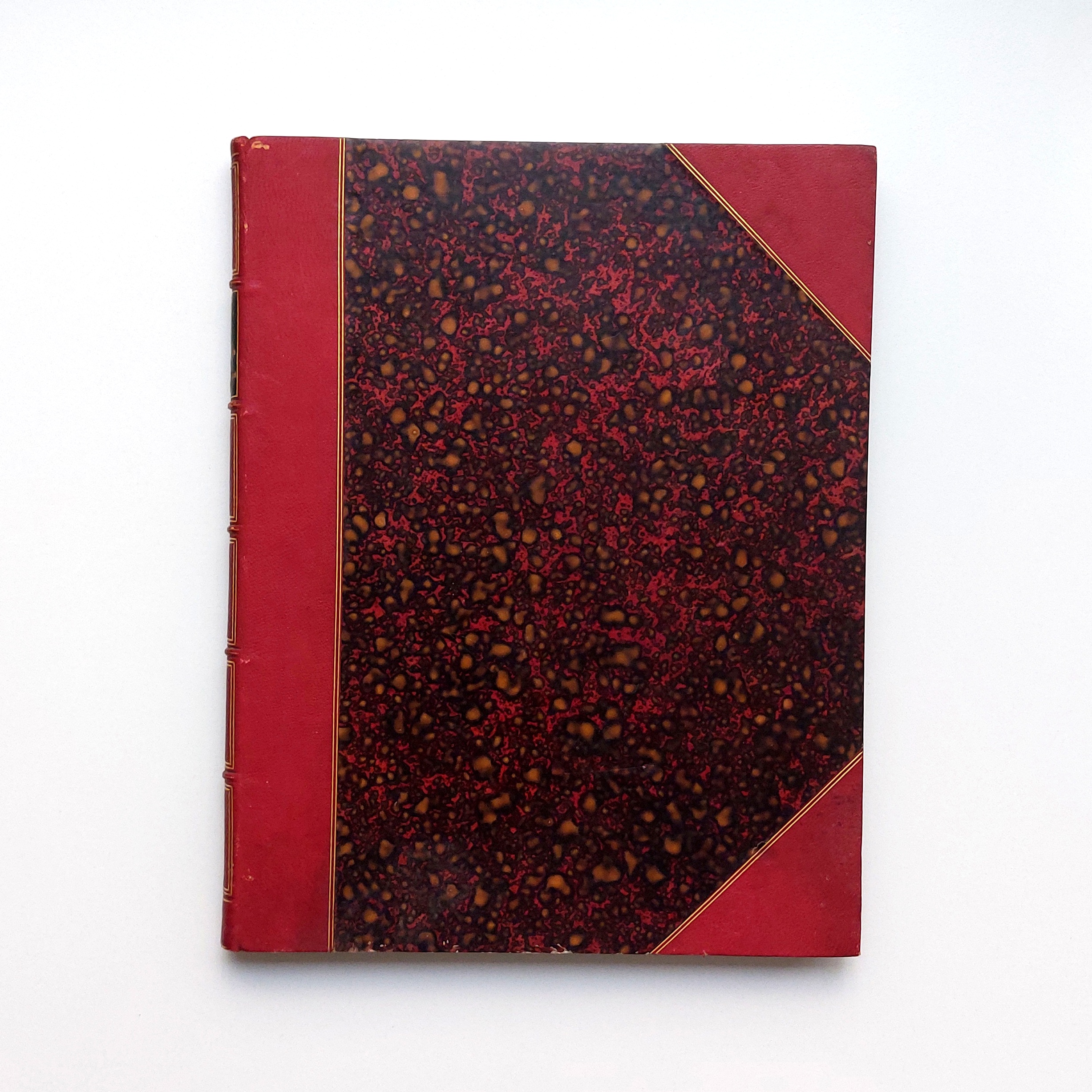
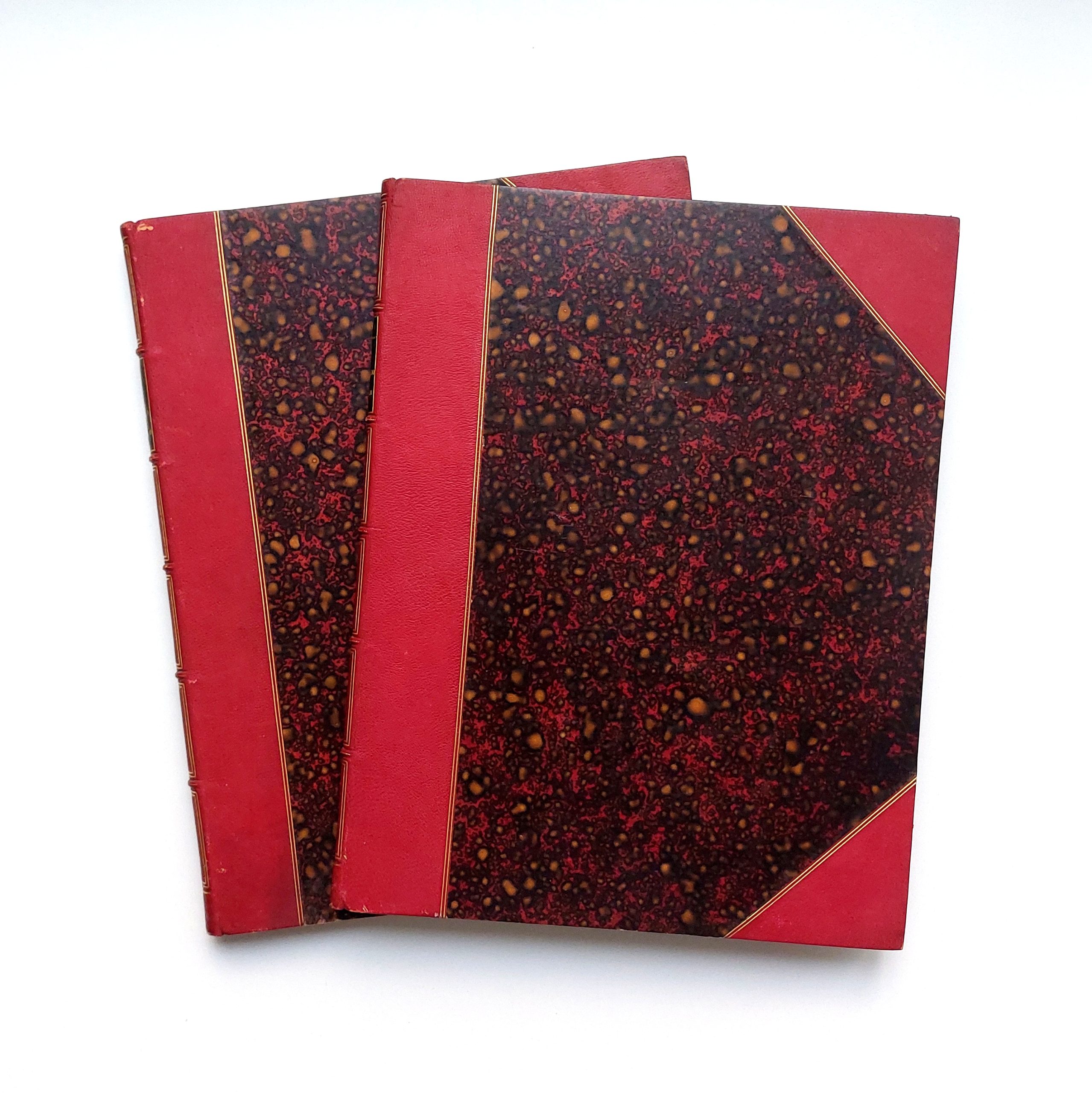
2 volumes in-4 (280 x 225 mm), contemporary red half morocco with corners, double gilt fillets, spines decorated to match, top edges gilt, untrimmed; slight rubbing and surface wear (contemporary bindings).
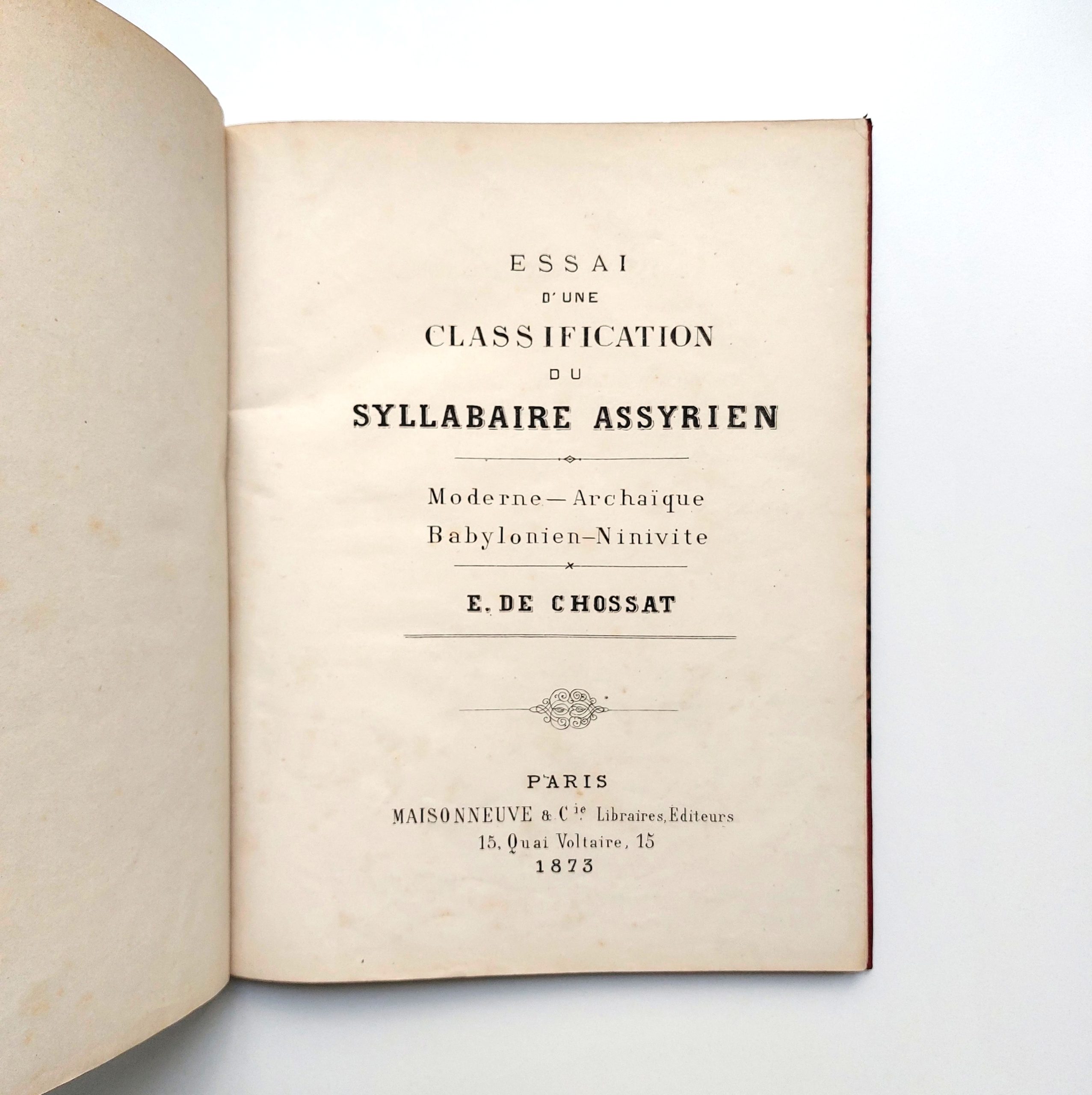
Essai d’une classification du Syllabaire assyrien, Moderne-Archaïque, Babylonien-Ninivite. Paris, Maisonneuve, 1873. 1 volume.
Classification des caractères cunéiformes babyloniens et ninivites. Paris, Imprimerie de Barousse, [1874?]. 1 volume.
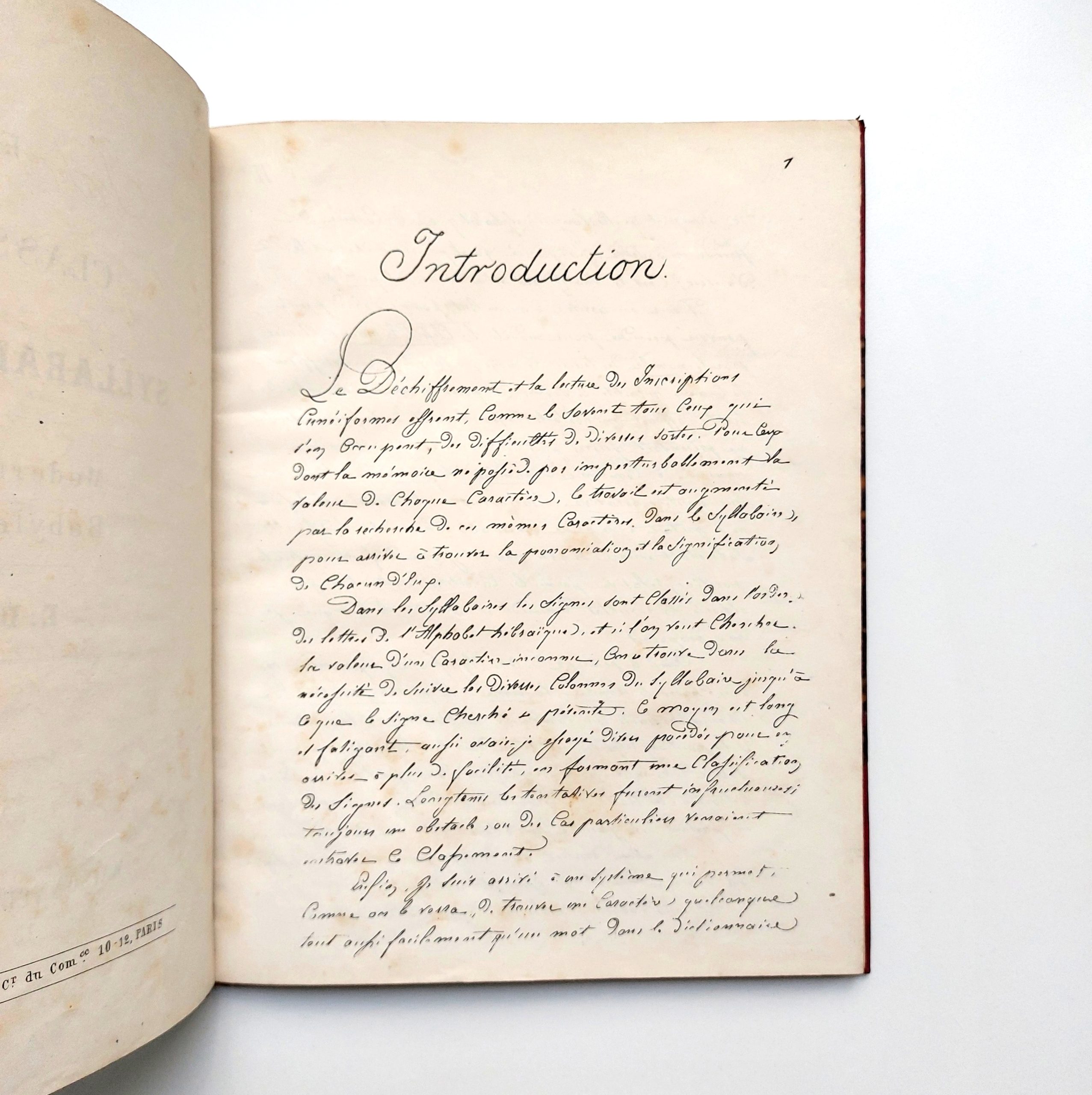
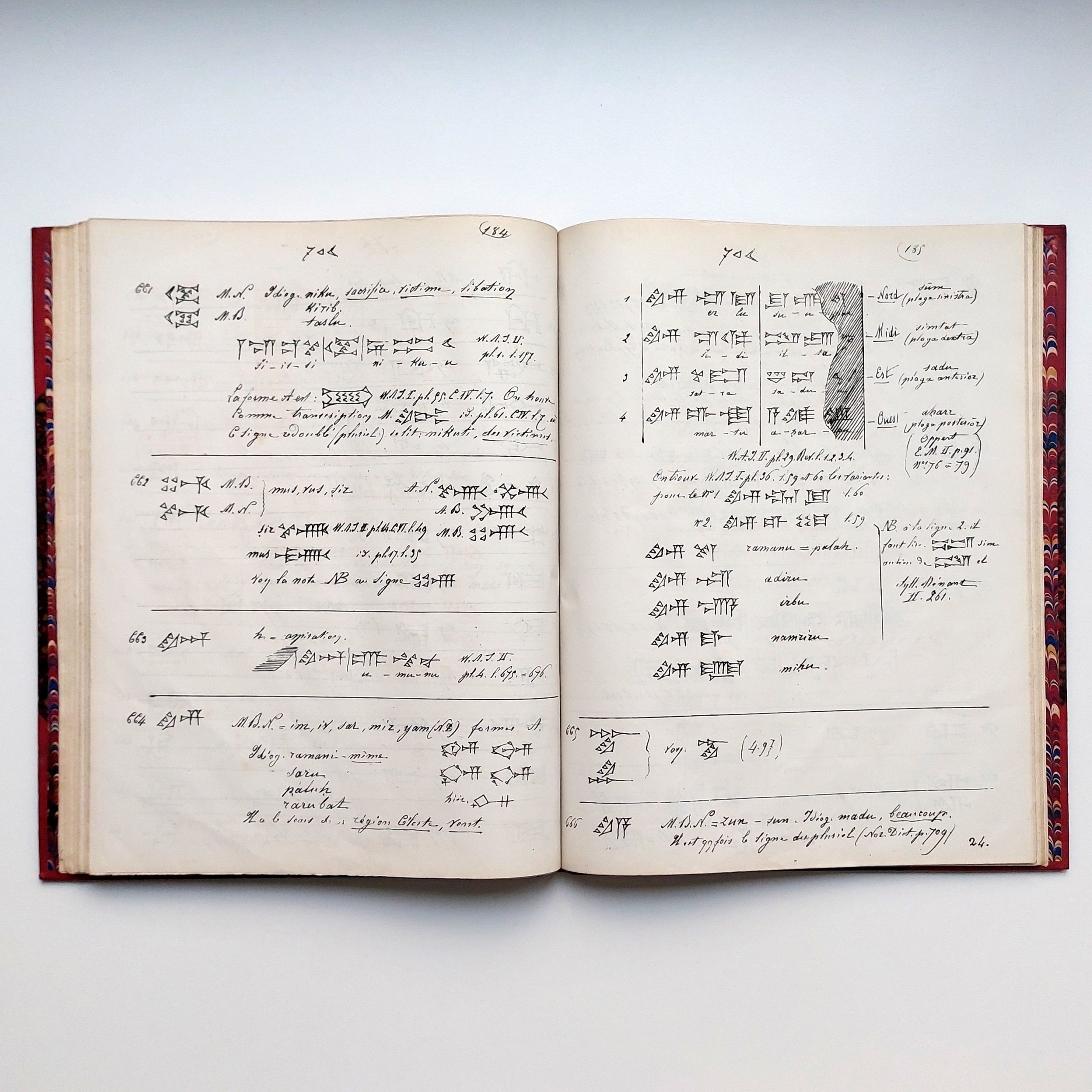
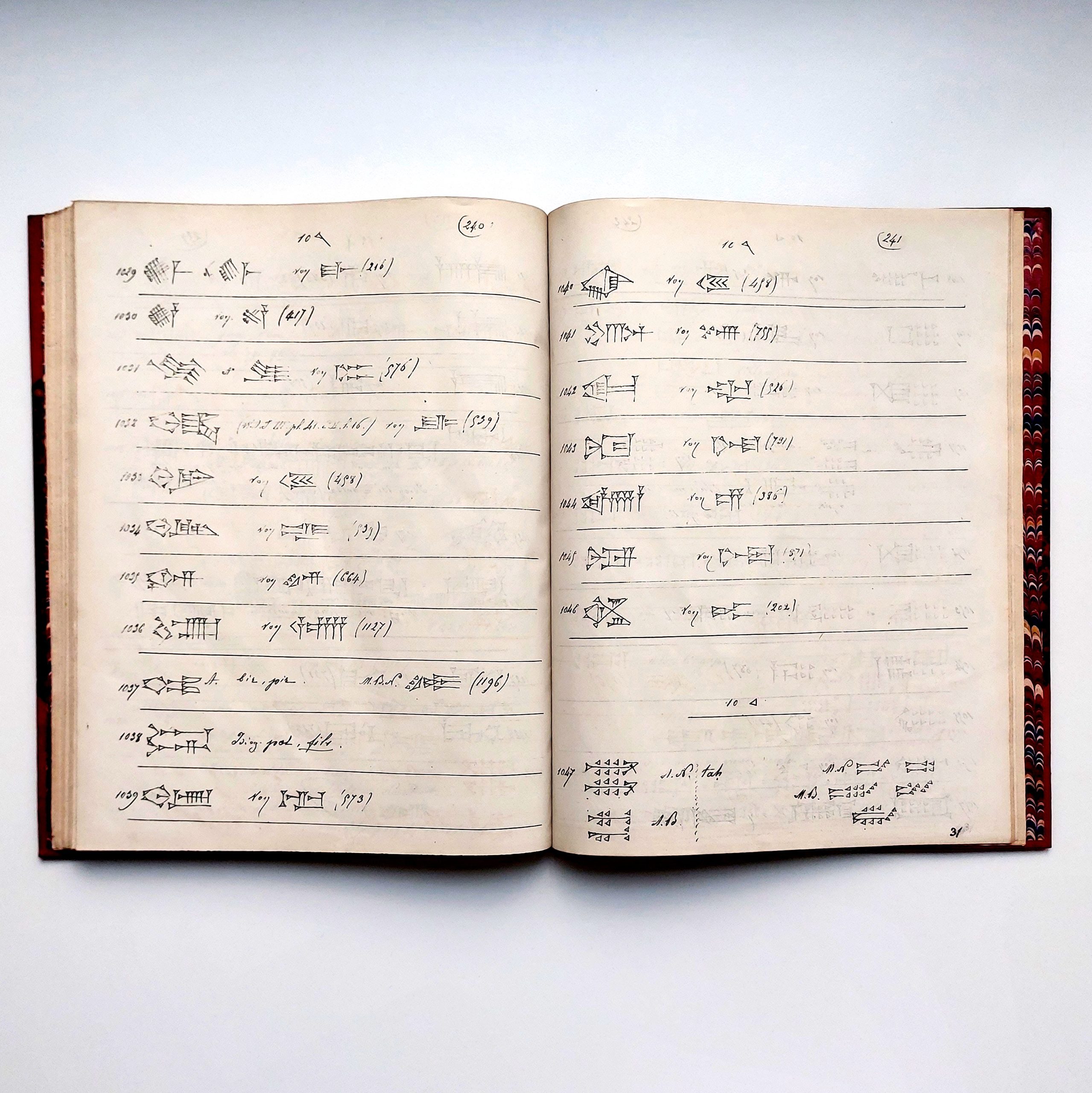
First editions, entirely reproduced in autograph facsimile, of these two rare pioneering studies on the classification of cuneiform signs.
These works belong to a crucial stage in the history of Assyriology: the systematic organization and classification of the hundreds of cuneiform signs and their numerous variants, essential to their study, comparison, and decipherment.
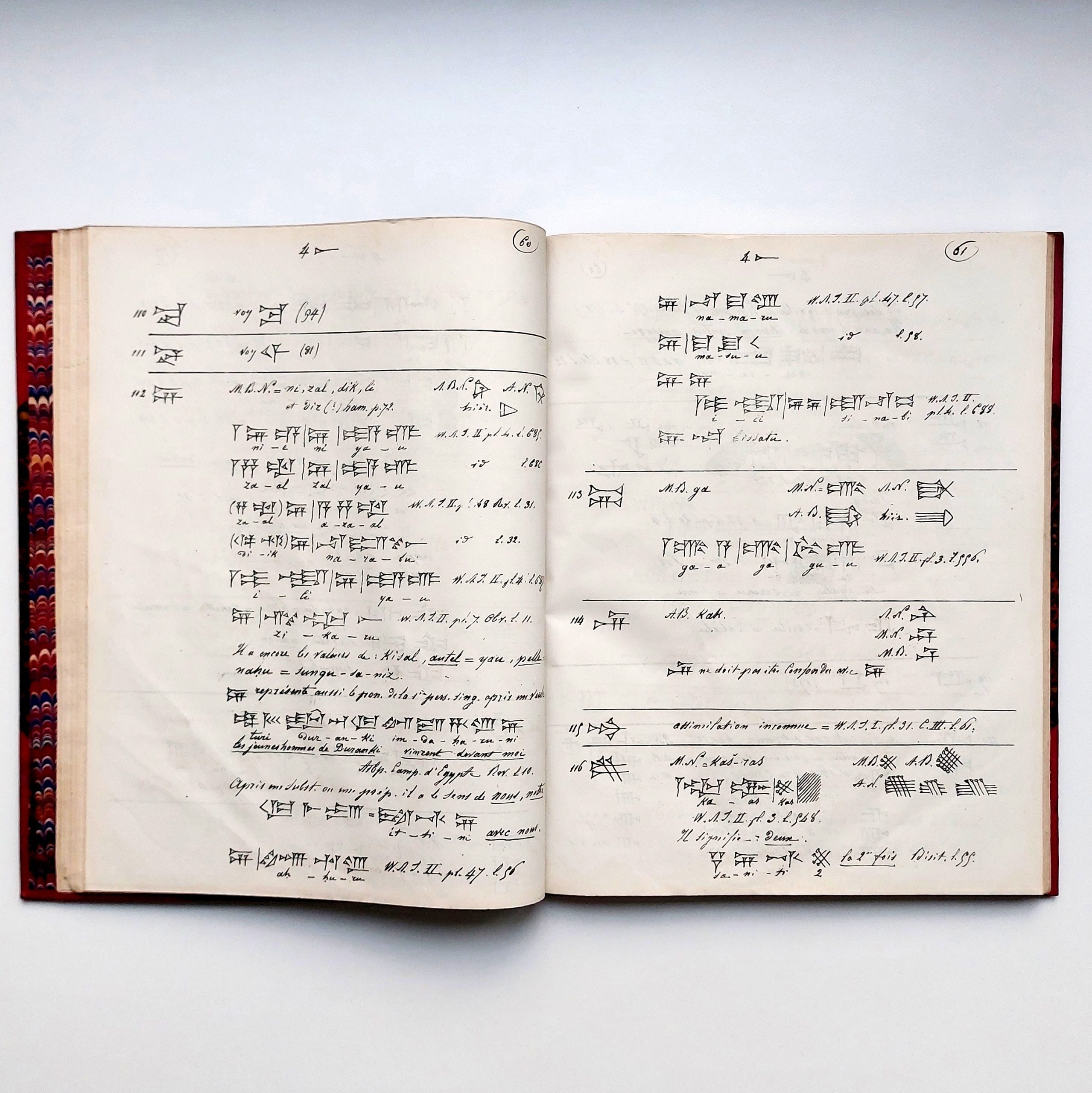
Édouard de Chossat first set out his method in his Essai d’une classification du Syllabaire assyrien, before developing, expanding, and correcting it in his Classification des caractères cunéiformes babyloniens et ninivites.
The corpus ultimately comprised 1,214 numbered signs, nearly three times the 442 entries in Joachim Ménant’s Syllabaire assyrien (Paris, Imprimerie impériale, 1869–1873).
Chossat developed an original method based on the form of the constituent elements of the signs, which he divided into four categories: “nail” (clou), “wedge” (coin), “hook” (crochet), and “stroke” (trait)—a distinctive feature still noted in modern studies of the history of cuneiform scholarship.
Important witnesses to the early efforts to create the scholarly tools required to organize, compare, and systematically identify cuneiform signs.
1 000€
In stock
Contact us